Tuesday, September 29, 2015

Bible Scholarship class beginning this Sunday

Sam's segment starts at 38 minutes - http://bobharden.com/archives/9_29_15.mp3

Sam talks about the Bible Scholarship class beginning this Sunday -  Below are my notes and the news release – The audio of the program is attached.

Goal – Deliver curriculum that clergy must master in seminary to the person in the pew.  Princeton, Harvard and Yale were all founded by churches and have highly regarded seminaries to this day.  My own denomination is heavily connected to Princeton Theological Seminary and the current pastor at Moorings is a Princeton graduate.  Attempting to provide a postgraduate seminary curriculum to the congregation might seem impossible but Theological Center in Naples has been doing just that for at least two decades.    

Modern Biblical scholarship uses all of the modern sciences.  Archeology, astronomy, physics (carbon 14 dating, creation myths and astrophysics), linguistics, history, critical literary analysis, numismatics, biology including DNA analysis of scrolls made out of animal skins.  I will keep the focus and the academic rather than the religious which is what the subject is really all about. 

For those of you who worship on Saturdays, or are free by 11:15 on Sundays…
W
  

Free Adult Education Opportunity
beginning Sunday October 4th
11:15 to noon – followed by Q & A
(childcare provided)

The Theological Center in Naples invites you to attend a Sunday Morning
Ongoing Biblical Exploration Class
starting with Genesis, led by Sam and Bunny Sewell

What is Biblical Exploration? It is not a devotional Bible Study,
but rather an academic study of the historical writings of various theologically diverse biblical scholars  (evangelicals, Catholics, mainline protestants, Jewish academics and secular historians.)

What Text is used for this study? The primary source for this extensive curriculum is the twelve volume Interpreter’s Bible. Each volume of this series, used for study/discussion, covers two or more books of the Old and New Testaments, and is a study resource found in the Moorings Church Strozier Library. Bring your Bible.

Facilitators Sam and Bunny Sewell have offered their training and knowledge to the public
 for more than two decades. Rev. Sam is President of the Theological Center in Naples.

Classes (free to the public) are held each Sunday in the Strozier Library
       on the Moorings Church Campus,
791 Harbour Dr, 1 block west of 41

        Register by contacting the Sewells
239/591-4565  or  bunnysam@bestselfusa.com

     Thanks for helping us spread the word!

Monday, September 28, 2015

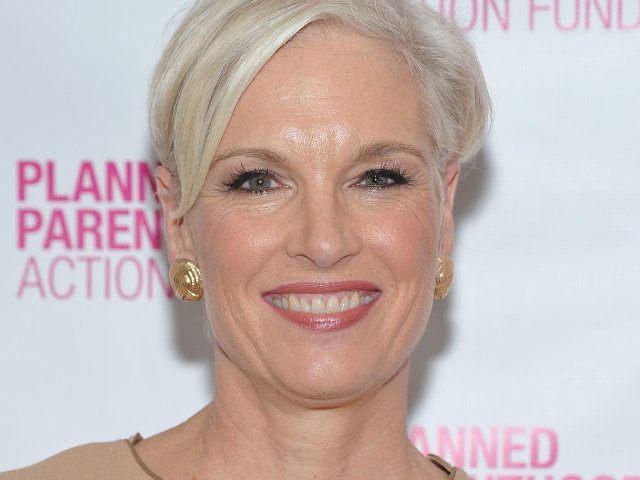
Cecile Richards ‘Proud’ of Planned Parenthood’s Organ Harvest but Claims ‘Minuscule’ Activity


Cecile Richards ‘Proud’ of Planned Parenthood’s Organ Harvest but Claims ‘Minuscule’ Activity
by Breitbart News 28 Sep 2015
WASHINGTON (AP) — In Planned Parenthood’s first congressional appearance since the release of undercover videos, the group’s president is defending its provision of fetal tissue for researchers and castigating Republicans for not investigating the anti-abortion activists who furtively made the recordings.

In testimony prepared for a hearing Tuesday, Cecile Richards said the organization’s donation of tissue from aborted fetuses is a “minuscule” part of its work proving health services for women. She said the group has nearly 700 clinics but obtains fetal tissue in less than 1 percent of them.

“Planned Parenthood is proud of its limited role in supporting fetal tissue research,” she said, arguing that the donations have helped scientists search for cures.

Abortion opponent David Daleiden obtained the videos by posing as an executive of a fake company seeking to supply fetal tissue to researchers. Richards said Daleiden, despite three years of doing that, didn’t entrap any Planned Parenthood officials into doing anything illegal.

“It is clear they acted fraudulently and unethically – and perhaps illegally,” Richards said. “Yet it is Planned Parenthood, not Mr. Daleiden, that is currently subject to four congressional investigations” by the GOP-run Congress.

Congressional Democrats have demanded that Daleiden be called to testify, but Republicans have ignored those pleas.

The videos ignited a political uproar among conservatives and Republicans that has revived abortion as a potent issue for the 2016 presidential and congressional campaigns, with many GOP presidential candidates condemning the group.

Conservatives’ demands that Congress cut Planned Parenthood’s federal payments – for which Republicans lack the votes to succeed – indirectly contributed to the GOP unrest that prompted House Speaker Rep. John Boehner (R-OH) 35%, R-Ohio, to announce his resignation last week. The organization receives about a third of its $1.3 billion annual budget, around $450 million, from federal coffers, chiefly reimbursements for treating Medicaid patients.

Richards’ testimony was provided by the House Oversight and Government Reform Committee, where she was set to appear. Her prepared remarks contained little her organization has not already said since the abortion foes began releasing the videos in July.

Conservatives and some Republicans say Planned Parenthood has broken federal laws forbidding sales of fetal tissue for profit. The group has denied breaking any laws.

Planned Parenthood
Open Society Foundations was a funder for the Planned Parenthood Federation of America, and the Carnegie Endowment for International Peace (think tank).

George Soros is the founder & chairman for the Open Society Foundations, and was the chairman for the Foundation to Promote Open Society.          
Foundation to Promote Open Society was a funder for the Carnegie Endowment for International Peace (think tank), and the Aspen Institute (think tank).
Carnegie Endowment for International Peace (think tank) was a funder for the Nuclear Threat Initiative (think tank).      
Jessica Tuchman Mathews is a director at the Nuclear Threat Initiative (think tank), was the president of the Carnegie Endowment for International Peace (think tank), a director at the American Friends of Bilderberg (think tank), and a 2008 Bilderberg conference participant (think tank).
Ed Griffin’s interview with Norman Dodd in 1982
(The investigation into the Carnegie Endowment for International Peace uncovered the plans for population control by involving the United States in war)
Ted Turner is a co-chairman for the Nuclear Threat Initiative (think tank), the chairman for the Turner Foundation, and the founder of CNN.
Cecile Richards was a grant overseer for the Turner Foundation, is the president for the Planned Parenthood Action Fund, and the president of the Planned Parenthood Federation of America.
Walter Isaacson was the chairman & CEO for CNN, and is the president & CEO for the Aspen Institute (think tank).
Jack Valenti was a trustee at the Aspen Institute (think tank), and a member of the Burning Tree Club.
Ann McLaughlin Korologos was a chair emeritus at the Aspen Institute (think tank), and married to Tom C. Korologos.
Tom C. Korologos is married to Ann McLaughlin Korologos, and a member of the Burning Tree Club.
John A. Boehner is a member of the Burning Tree Club, the House leader for the Republican establishment, and the speaker for the U.S. House of Representatives.

Intelligent people's brains wired differently to those with fewer intellectual abilities, says stud


Intelligent people's brains wired differently to those with fewer intellectual abilities, says stud
Scientists claim to have found a correlation between how well wired-up some individuals were to their cognitive abilities and general success in life
steve connor Science Editor
Monday 28 September 2015 15:33 BST
The brains of high-achieving individuals are wired up differently to those of people with fewer intellectual or social abilities according to one of the first studies to find a physical link between what goes in the brain and a person’s overall lifestyle.

An analysis of the “connectivity” between different parts of the brain in hundreds of healthy people found a correlation between how well wired-up some individuals were to their cognitive abilities and general success in life, scientists said.

The researchers found that “positive” abilities, such as good vocabulary, memory, life satisfaction, income and years of education, were linked significantly with a greater connectivity between regions of the brain associated with higher cognition. 

This was in contrast to the significantly lower brain connectivity of people who scored high in “negative” traits such a drug abuse, anger, rule-breaking and poor sleep quality, the scientists said
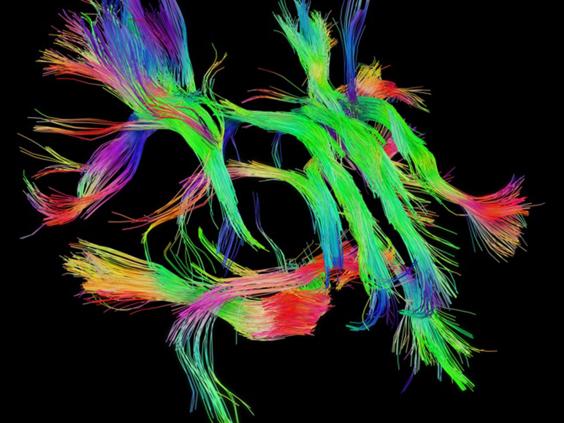
 White matter fiber architecture from the Connectome Scanner dataset. 

“We’ve tried to see how we can relate what we see in the brain to the behavioural skills we can measure in different people. In doing this, we hope to able to understand what goes on ‘under the bonnet’ of the brain,” said Professor Stephen Smith of Oxford University, who led the study published in Nature Neuroscience.

The scientists were part of the $30m (£20m) Human Connectome Project funded by the US National Institutes of Health to study the neural pathways of the brain. Connectomes have been likened to taking real-time images of the living circuit diagrams governing the communication of signals from one part of the brain to another.

They compared the “connectomes” of 461 health people taken by real-time brain scanners called functional magnetic resonance imaging (fMRI) and attempted to see if there were any significant correlations with 280 different behavioural or demographic measures, such as language vocabulary, education and even income.
“You can think of it as a population-average map of 200 regions across the brain that are functionally distinct from one another.

Each fMRI analysis looked at the connectivity – the amount of nerve signalling – that takes place between about 200 different regions of the brain. The one that stood out was the connectivity between the parts of the brain involved in so-called higher-level cognition, such as language and learning, Professor Smith said.

“You can think of it as a population-average map of 200 regions across the brain that are functionally distinct from one another. Then we looked at how much all of those regions communicated with each other, in every participant,” Professor Smith said.

“The quality of the imaging data is really unprecedented. Not only is the number of subjects we get to study large, but the resolution of the fMRI data is way ahead of previous large datasets,” he said.

The ability to measure the amount of nerve signalling between different parts of the brain, especially those involved in high cognition such as learning and memory, could help scientists to better understand the nature of general intelligence, which is currently measured by tests that examine a range of intellectual skills.

“It may be that with hundreds of different brain circuits, the tests that are used to measure cognitive ability actually make use of different sets of overlapping circuits,” Professor Smith said.

“We hope that by looking at brain-imaging data we’ll be able to relate connections in the brain to the specific measures, and work out what these kinds of test actually require the brain to do,” he said.

It may also be possible to use the research to work out how to train people to improve their brain connectivity and therefore push than up the scale so that they achieve more than they otherwise would, he added.

“It’s a question of whether it’s possible to move people up the axis of connectivity. We know from other research that it is possible to improve cognitive performance with training, but what we don’t know yet is whether this is true of connectivity,” he explained.